AI Labels, TikTok's Full-Song Leap, and a Record Year for Indie Royalties: Music's August Reset
Independent artists are entering a new era where AI transparency, frictionless TikTok-to-streaming discovery, and record indie royalty numbers are creating more opportunities, but also making strong marketing and documentation more important than ever.
Three stories broke across the music industry this month, and each one points in the same direction: independent artists now have more power, more scrutiny, and more tools than ever before. From new rules on labeling AI-generated songs to a streaming integration that erases the wall between a TikTok clip and a full catalog listen, the ground independent artists stand on is shifting fast. For anyone building a career through streaming, social discovery, and music marketing, understanding these shifts is no longer optional.
Music's AI Labels Just Got a Blueprint
In late July, the RIAA and IFPI, alongside groups representing independent labels, songwriters, and performers, proposed a shared system for labeling AI-generated music across streaming platforms. The plan calls for two tags: "AI Generated" for tracks built entirely from a text prompt or where a machine produced the lead vocal or main instrumental take, and "AI Assisted" for tracks that are mostly human work with AI involved in places. Apple Music confirmed in an email to partners on August 21 that it will begin showing its own AI transparency tags to listeners later this year, joining Deezer, which adopted automatic AI tagging in 2025, and Tidal, which rolled out its own policy in June.
The system remains voluntary for now, and plenty of details are still unsettled, including what counts as "substantially human made" and how chart organizations will treat AI-assisted releases when it comes to eligibility. That ambiguity matters more for independent artists than for major label acts with legal and A&R teams parsing every clause. A songwriter who uses AI assisted vocal tuning or a producer who leans on generative tools for a demo layer needs to understand which side of that line a release falls on before a platform makes the call for them.
For independent artists, the upside is real. A clear labeling standard protects human made music from being drowned out by AI generated catalog dumps, and it gives artists who use AI thoughtfully, as a tool rather than a shortcut, a way to signal that distinction to listeners and playlist curators alike. As these tags roll out across the music industry, artists who document their creative process now, from session notes to co writing credits, will be better positioned to prove authorship if platforms start asking.
TikTok and Apple Music Just Erased a Barrier to Discovery
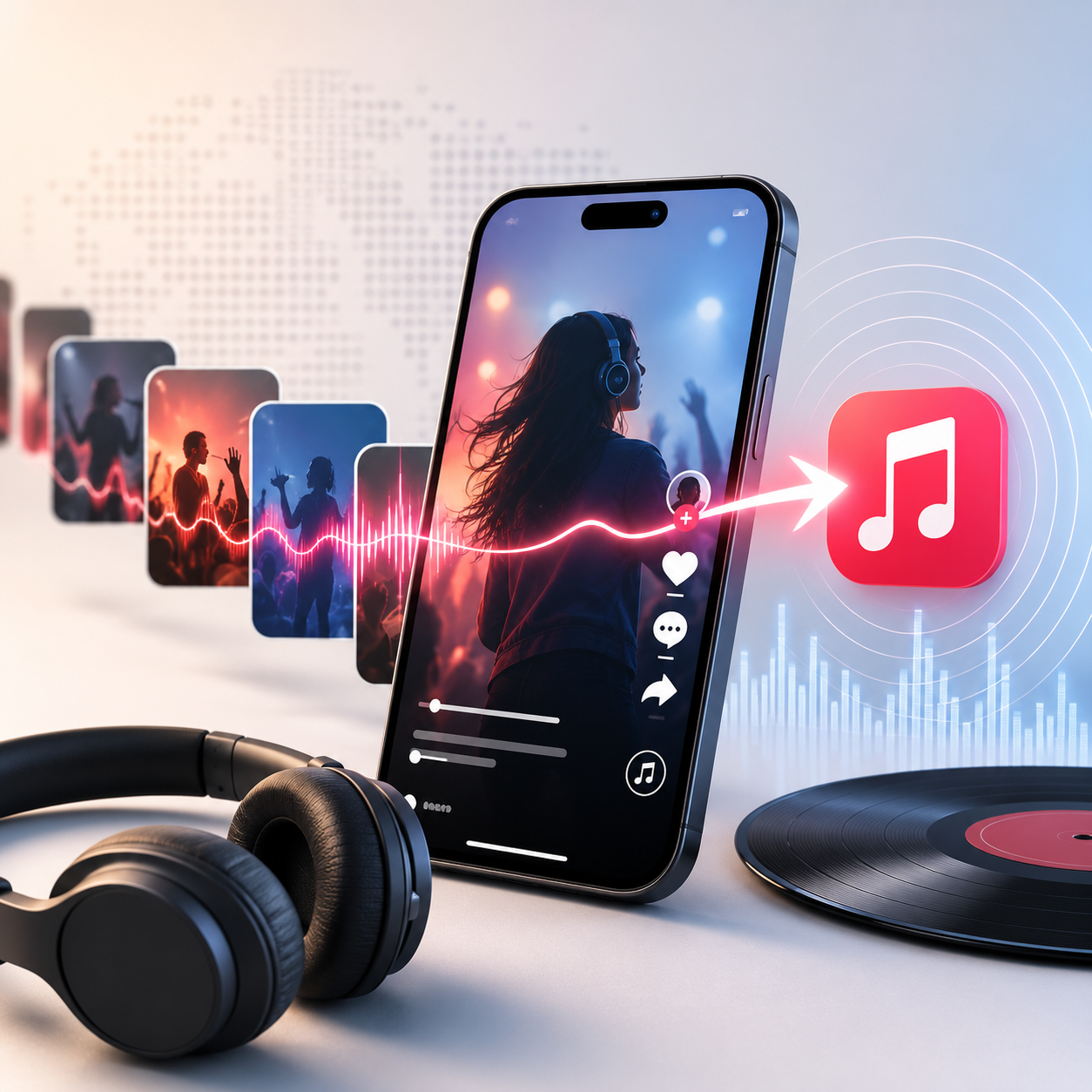
Apple Music and TikTok launched a "Play Full Song" integration that lets Apple Music subscribers listen to complete tracks discovered on TikTok without ever leaving the app. A listener who hears fifteen seconds of a song in a video can tap through and hear the whole thing instantly, with no searching and no app switching to break the momentum. The deal is exclusive to Apple Music for now, which means TikTok users on other streaming services still have to search manually to hear the full track.
This closes a gap that has cost artists real momentum for years. TikTok already drives outsized discovery, with its "Add to Music App" feature logging more than 6 billion track saves to premium streaming services in the twelve months to April 2026, an average of half a billion saves every month. Viral TikTok moments already correlate with Spotify streaming spikes within 48 to 72 hours of a clip taking off. A frictionless full song listen shortens that discovery to stream window even further, and it raises the value of a well produced hook that can actually survive the jump from short clip to full track.
The tighter this discovery to stream pipeline gets, the more it rewards artists who treat their TikTok clip and their studio recording as one continuous piece of marketing rather than two separate projects. A hook engineered for a scroll stopping first three seconds only pays off if the full song that follows delivers on that promise. Independent artists chasing viral moments now need mixing, mastering, and sequencing built to survive a listener going straight from a fifteen second clip into the full track without a drop in energy.
Indie Artists Just Had Their Biggest Year Yet, On Paper

Spotify's 2026 Loud and Clear report showed that independent artists and labels now account for roughly half of all royalties the platform pays out, about $5 billion of the $11 billion distributed in 2025. More than 1,500 artists crossed $1 million in Spotify royalties last year, and over 80 crossed $10 million. Perhaps more telling for the broader independent artist population, more than 13,800 artists earned at least $100,000 from the platform, nearly 1,400 more than the year before, and more than a third of artists earning at least $10,000 were DIY or started that way.
These numbers describe genuine opportunity, but they also describe a far more crowded field. More than 100,000 tracks are uploaded to streaming platforms every single day, and reaching even $10,000 in royalties increasingly requires the kind of sustained, cross platform visibility that used to be the exclusive domain of label backed acts. Streaming payouts reward artists who already have an audience, which means growing that audience through channels beyond the DSPs themselves, through social platforms, radio, playlists, and press, is what actually moves an artist from the long tail toward the middle class Spotify is describing.
The report is a reminder that in today's music industry, streaming royalties are an outcome of marketing, not a substitute for it. Artists who treat playlist placement, social content, and press coverage as separate from their music, rather than as the engine that drives streams in the first place, are the ones left behind as the platform gets more competitive every year.
Turning These Shifts Into Momentum
Each of these stories points to the same practical conclusion: independent artists succeed today by treating production, content, and promotion as one connected system rather than three separate jobs. A track has to be recorded and mixed well enough to survive the jump from a TikTok hook to a full stream, its authorship has to be documented and defensible as AI labeling becomes standard, and it needs consistent visibility across playlists, social platforms, and press to have any real shot at the kind of royalty growth Spotify's Loud and Clear report describes.
This is exactly where a full service partner earns its keep. Tendance Music's audio production and music video production work is built around the same discovery to stream pipeline that TikTok and Apple Music just made faster, helping artists deliver a finished track that holds up once a listener taps through from a viral clip. On the marketing side, services like Spotify and Apple Music playlist features, TikTok and Instagram post features, influencer marketing, and paid promotion campaigns targeting North American audiences are designed to build the sustained visibility that separates a one time viral moment from a real, growing royalty stream. Artists can see the full breakdown of what that looks like on the Tendance Music promotion page.
None of this replaces a strong song, but strong songs increasingly need infrastructure around them to be heard at all. Whether an artist is trying to understand how AI labeling might affect an upcoming release, wants a music video built for the TikTok to full song pipeline, or is simply trying to grow past that first $10,000 in streaming royalties, the team at Tendance Music works with independent artists across the US and Canada to build that infrastructure one release at a time. Artists ready to talk through where their next release fits into this landscape can reach out through the Tendance Music contact page.