Spotify's AI Voice Assistant, Deezer's AI Upload Flood, and TikTok's Apple Music Deal: Inside the Music Discovery Shake-Up of 2026
Music discovery is changing through AI, curated platforms, and faster TikTok-to-streaming connections. Independent artists now need strong online visibility and smart promotion to stand out.
Three separate announcements landed within a single week this July, and together they say something bigger than any one headline. Streaming platforms are racing to redefine how listeners find music, and every shift in that race changes the odds for independent artists trying to get heard. From a chatbot that talks back to a flood of AI uploads to a new shortcut between TikTok and Apple Music, here is what is actually changing and what it means for anyone serious about music promotion in North America.
Spotify Introduces "Talk to Spotify," a Conversational AI Assistant

On July 14, Spotify began rolling out a beta feature called "Talk to Spotify," a conversational AI assistant available to Premium subscribers in the United States, Ireland, and Sweden. Users type or speak into a text box on the Home and Now Playing screens, and the assistant responds by building playlists on the fly, answering questions about listening history, and serving up trivia about artists and albums. It draws on a mix of Spotify's own technology and outside language models, and it is currently limited to English for listeners aged eighteen and older.
What makes this significant is the shift it represents. For most of the streaming era, discovery has meant scrolling a feed or trusting an algorithm to queue up the next track. A conversational interface changes the interaction entirely, letting a listener ask directly for what they want and receive an answer shaped by both personal history and a broader knowledge base. That knowledge base has to come from somewhere, and increasingly it will be built from artist bios, press coverage, and metadata that already exists online.
For independent artists, this raises the stakes on the parts of an online presence that used to feel optional. An assistant that answers questions about an artist can only answer well if there is accurate, well-structured information to pull from. Clean metadata, an updated artist bio, and consistent press coverage are no longer just nice to have. They are the raw material an AI system will use to decide what to say about a catalog, and by extension, whether that catalog gets recommended at all.
Deezer's AI Upload Flood: What Happens When Half a Catalog Isn't Human
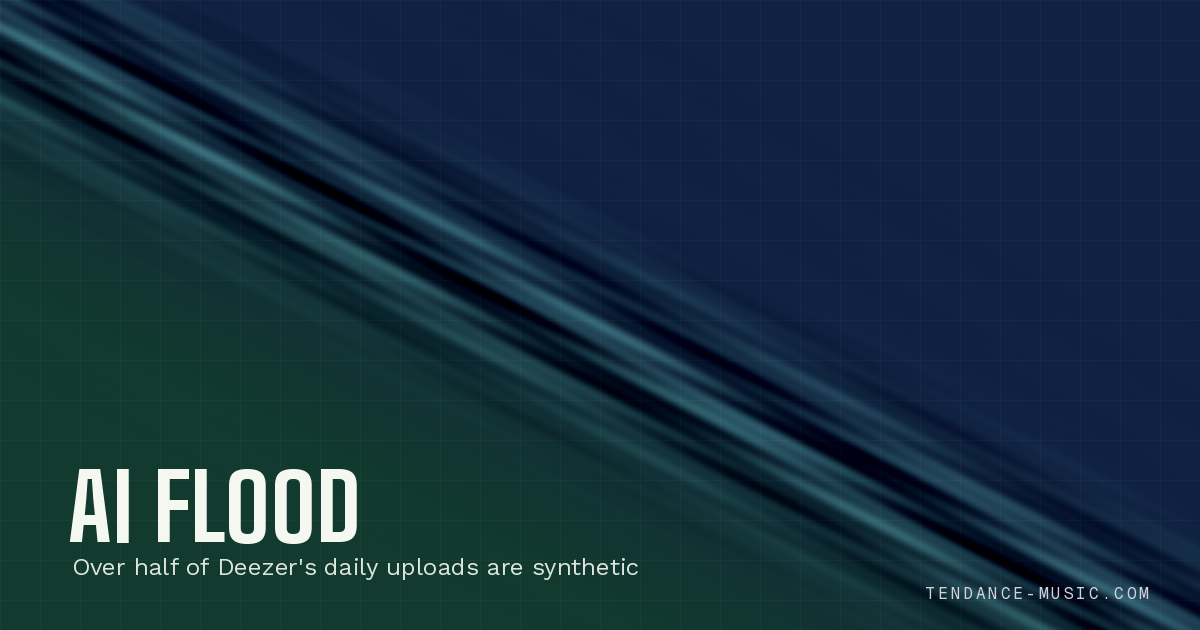
Deezer reported in late July that more than half of the roughly 90,000 tracks submitted to the platform each day are now fully AI-generated, up from 44 percent back in April. The number has been climbing steadily since the platform began tracking it, and it raises an uncomfortable question for the entire streaming ecosystem: what happens to discovery when a majority of new supply is synthetic. Deezer's own data offers some reassurance, since actual listening to AI tracks remains low, somewhere between one and three percent of total streams. But the company also found that up to 85 percent of streams on fully AI-generated tracks in 2025 were fraudulent, meaning much of that content exists to game royalty payouts rather than to reach real listeners.
In response, Deezer has built out a patent-pending AI detection system that has been running since January 2025, and it now excludes flagged AI tracks from algorithmic recommendations and editorial playlists entirely. In June, the platform became the first major streaming service to explicitly label AI-generated tracks for listeners, and it continues to remove songs tied to fraudulent streaming activity or long stretches of inactivity. Other platforms are watching closely, and similar labeling and filtering systems are likely to spread across the industry as the volume of synthetic uploads keeps growing.
For independent artists making music the traditional way, this is a mixed signal worth paying attention to. The flood of AI content makes passive discovery, meaning simply uploading and hoping an algorithm notices, less reliable than ever, since human-made tracks are now a shrinking share of a rapidly growing catalog. At the same time, platforms actively working to protect editorial placements and curated playlists from synthetic content create more room for real artists who can get in front of the people making those curation decisions. Streaming success increasingly depends on being found by a human curator or a promotion partner, not just an algorithm sorting through noise.
TikTok and Apple Music Launch "Play Full Song" Integration
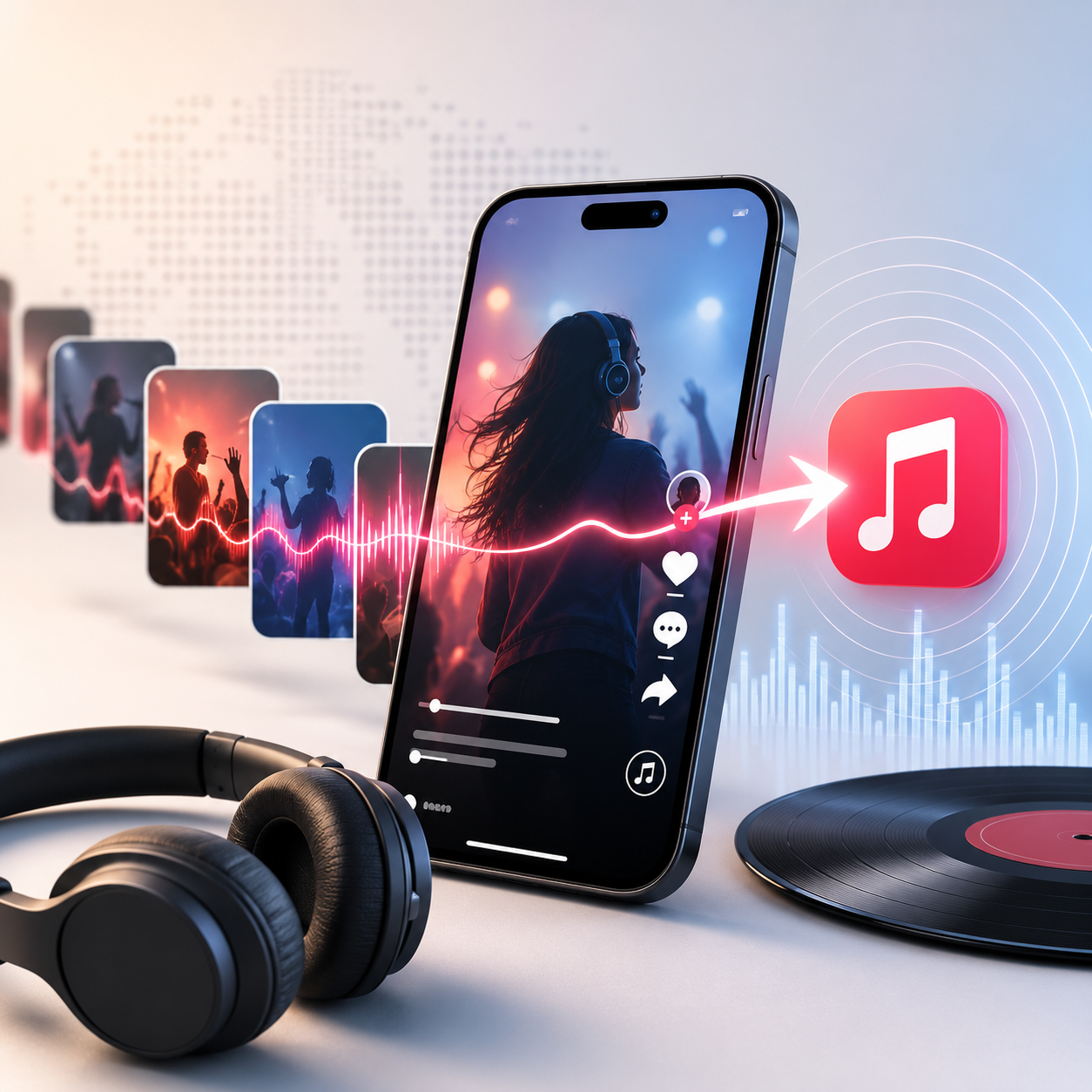
TikTok and Apple Music rolled out a new feature this summer that lets users tap "Play Full Song" directly from a video's For You Page or Sound Detail Page, opening an Apple Music player to stream the complete track. From there, listeners can save the song to their library or add it straight to an Apple Music playlist without ever leaving the discovery flow that started on TikTok. The partnership is exclusive to Apple Music for now, meaning Spotify subscribers cannot yet complete that same loop.
This builds on TikTok's existing "Add to Music App" feature, which has already driven roughly 6 billion track saves over the past year according to industry reporting. What is new is the frictionless jump from a fifteen-second clip to a full listen and a saved playlist add, all in two taps. TikTok has functioned as music's most powerful discovery engine for years, but this integration closes the gap between hearing a hook in a video and actually streaming the song, which has historically been the point where a lot of potential fans dropped off.
For independent artists, the practical takeaway is that where a song's short-form clip gets seeded now has a more direct effect on where the resulting stream lands. An exclusive deal with Apple Music means an artist's TikTok strategy and their platform-specific promotion strategy need to work together rather than as separate efforts. A track that goes viral on TikTok has a clearer, shorter path to becoming a stream on Apple Music today than it did a few months ago, and artists who understand that pipeline can plan content drops and sound selection with it in mind.
What This Means for Artists Navigating Music Promotion Right Now
Taken together, these three stories point to the same conclusion from different directions. Discovery is no longer a single algorithm quietly sorting a feed. It is a conversational assistant that needs accurate information to work with, a curation system actively filtering out synthetic noise, and a cross-platform handoff that rewards artists who plan their content with more than one app in mind. Standing out in that environment takes more than uploading a track and waiting, and it is exactly the kind of shift that makes coordinated music marketing worth the investment.
This is where the practical work of music promotion matters most. Tendance Music's Artists Web Coverage builds the kind of accurate, SEO-optimized artist pages, biographies, and press history that an AI assistant like Spotify's needs to represent a catalog well. The TikTok Post Feature and Instagram Story Feature are built around exactly the kind of platform-native content that feeds the TikTok-to-streaming pipeline Apple Music just made faster. And with editorial curation becoming more selective as platforms push back against AI-generated noise, submissions to Tendance Music's Spotify and Apple Music playlist network give independent artists a real path to the human-curated placements that still drive genuine discovery. A full look at how these pieces fit together is available on the Tendance Music promotion page.
None of this changes the fundamentals of good music, but it does change how that music gets found. Artists who treat their metadata, their cross-platform strategy, and their curator relationships as part of the creative process, not an afterthought, are the ones best positioned as streaming platforms keep experimenting with AI and cross-app partnerships. If you are trying to figure out where your own release fits into this shifting landscape, the team at Tendance Music is glad to talk through it. You can reach out directly through the Tendance Music contact page to start that conversation.