Record Royalties, a Platform Reinvention, and the 10-Second Hook: What Independent Artists Need to Know Right Now
Spotify’s $11B payouts show independent artists can earn more than ever, while its new “multiformat ecosystem” makes visuals as key as audio. TikTok’s 10-second hooks are reshaping discovery, so artists must turn short clips into full-track engagement.
The music industry rarely pauses, and April 2026 is proof. In just the past few weeks, Spotify revealed a landmark payout report that reshapes what financial success looks like for independent artists, redefined its entire identity as a platform, and a growing body of data confirmed what many creators have been quietly sensing: listeners are falling in love with 10-second clips, not full songs. For artists navigating music promotion in North America and beyond, these three shifts are not background noise. They are the new signal.
Spotify's $11 Billion Payout: The Growing Middle Class of Music
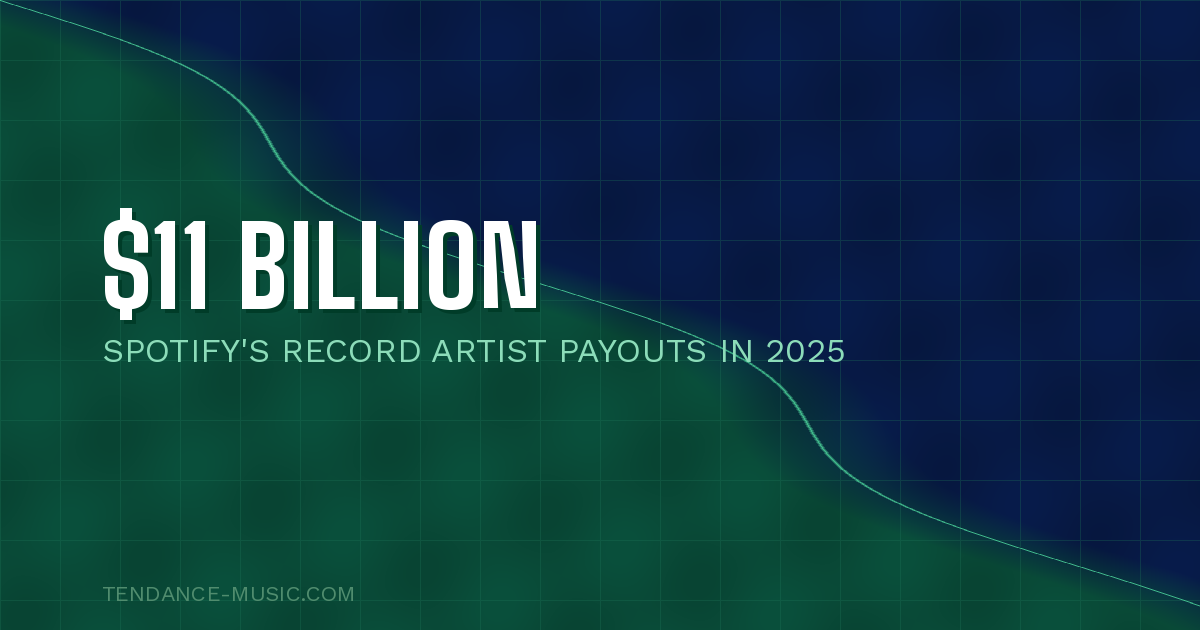
Spotify's annual Loud and Clear report landed in late March 2026, and the headline number is impossible to ignore: the platform paid out a record $11 billion in royalties to the music industry in 2025, bringing its all-time cumulative total to $70 billion. Those are staggering figures, but the real story sits deeper in the data, in what it reveals about who is actually earning and how the landscape for independent artists has changed over the past decade.
The number of artists generating at least $100,000 in Spotify royalties has nearly doubled since 2015, reaching 13,800 in 2025. Some 1,500 artists crossed the $1 million threshold, and 80 artists globally earned more than $10 million from the platform alone. But the detail that deserves the most attention is this: the 100,000th highest-earning artist generated over $7,300 in royalties last year. In 2015, that same position generated only $350. The so-called musical middle class is not a talking point. It is measurably real and growing.
Equally significant is the role of independent artists in driving these numbers. For the second consecutive year, independent artists and labels accounted for roughly half of all royalties paid out on Spotify. Artists from 75 different countries generated at least $500,000 in streaming revenue, up from 66 the year before. The geographic expansion of music earning power is accelerating, and it validates what many in the industry have argued for years: a well-promoted independent artist, releasing music strategically and building an audience across platforms, can now build a genuinely sustainable career without a major label deal.
Spotify Is No Longer a Streaming Platform (At Least, That Is What It Says)
On April 1, 2026, Spotify made a move that raised eyebrows across the industry. The company announced the launch of interactive carousel ads, allowing brands to highlight up to six products within a single swipeable ad unit, complete with individual images, links, descriptions, and pricing. The ads appear directly in the Now Playing view, visible while users are actively listening. It is an aggressive expansion into visual advertising territory. What made the announcement particularly striking was the language Spotify chose to use about itself: the company declared it no longer considers itself a "streaming platform." Instead, Spotify is now positioning as an "interactive multiformat ecosystem."
That language is a deliberate signal about where Spotify's leadership sees the platform heading. The push into music videos, the expansion of podcasts with full video components, and now the introduction of carousel advertising all point in the same direction: Spotify wants to compete for eyes, not just ears. For artists, this evolution carries real implications. A platform that rewards visual content, not just audio streams, means that music videos, live performance clips, and behind-the-scenes footage are becoming more than promotional extras. They are increasingly central to how an artist performs within the platform's algorithm and advertising ecosystem.
The rebrand also raises questions about what royalties and visibility will look like as Spotify becomes a more complex media environment. Artists who understand how to leverage video content alongside audio releases will have a meaningful advantage. Those still treating Spotify as a place to simply upload a track and wait are likely to find themselves further behind. The platform is changing the rules, and the window to adapt early is open right now.
TikTok Clips Are Driving Discovery, But Full Songs Are Getting Skipped
A pattern that music marketers and streaming analysts have tracked for the past two years is now well past the point of debate: TikTok is the most powerful music discovery engine in the world, but it is not translating into full-song listening at the rate most artists hope for. New data and behavioral research from early 2026 confirm that listeners are connecting with music through 10 to 20-second hook moments, looping a chorus, sharing a clip, and then moving on. The full-song experience, the thing that has defined music consumption for generations, is increasingly secondary to the viral fragment.
This creates a genuine strategic tension for artists. Success on TikTok can drive enormous visibility, but close to three-quarters of users who follow an artist on the platform never explore that artist's music off of it. The discovery happens on TikTok, and it often stays there. Meanwhile, streaming platforms still weight full-song plays, completion rates, and saves in their algorithms. An artist can have a clip rack up millions of views and still see flat streaming numbers if the hook does not translate into a reason for listeners to seek out the complete track.
What this means in practice is that artists need to engineer their music and marketing strategy around two distinct listener journeys: the clip that stops the scroll, and the full track that earns the save. The best-performing artists of 2025 and early 2026 have understood this divide and built release strategies that address both simultaneously, using TikTok hooks deliberately rather than accidentally, and then converting that attention into platform engagement through consistent presence across Spotify, Apple Music, and YouTube. The 10-second hook is not a shortcut. It is its own craft, and the artists who treat it that way are the ones building durable audiences.
Navigating the New Landscape: Where Artists Go From Here
These three stories, taken together, describe a music industry that rewards artists who are active, adaptive, and strategically visible across multiple formats and platforms at once. The financial opportunity has never been more real for independent artists, as the Spotify Loud and Clear numbers make clear. But so has the complexity of reaching the thresholds that turn streaming into a meaningful income source. Getting into those earnings tiers requires more than good music. It requires consistent, informed, and multi-channel music promotion over time.
The shift in Spotify's self-definition toward a multiformat ecosystem reinforces something that music promotion professionals have long understood: artists need a presence that spans audio, video, editorial, and social channels simultaneously. Releasing a track without a corresponding visual strategy, whether through a music video, Instagram content, or TikTok clips, means leaving reach and engagement on the table. Platforms are rewarding completeness of presence, not just audio quality alone.
For independent artists looking to accelerate their growth, the answer is not to chase every trend in isolation, but to build a coherent strategy that puts the right music in front of the right listeners at the right moment across the platforms that matter. That kind of sustained, coordinated effort is exactly what separates artists who plateau from those who grow. If you are ready to take your release strategy seriously in 2026, reaching out to a dedicated music marketing team is one of the most direct steps you can take toward making the current landscape work in your favor.